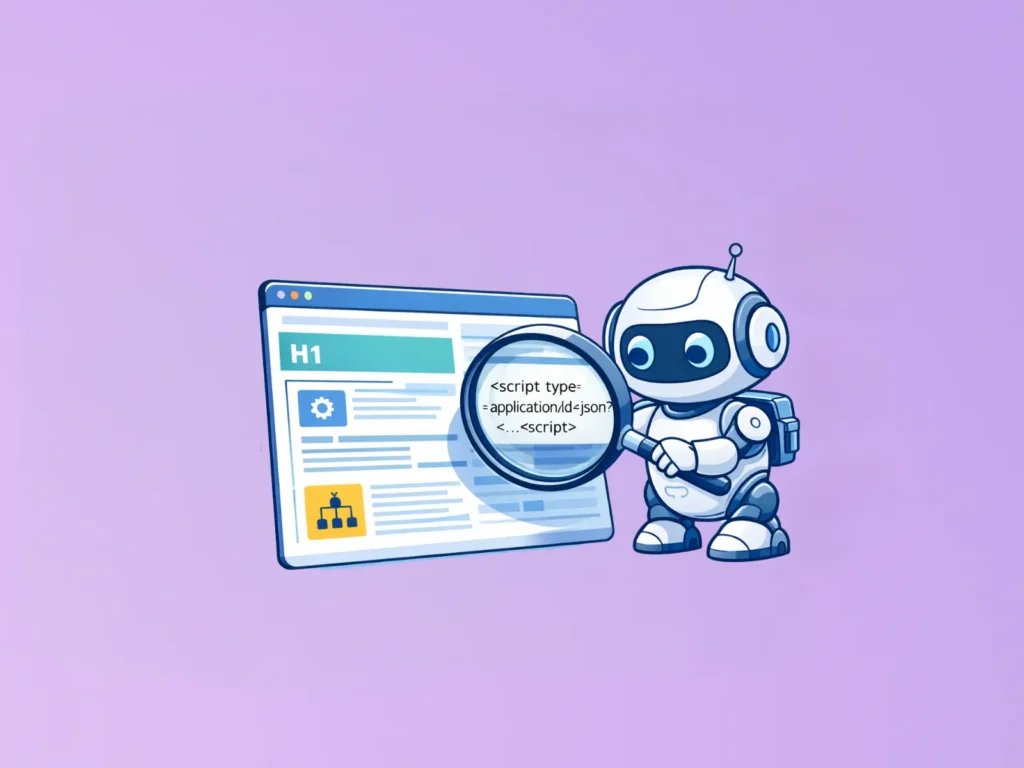

First of all, it’s important to clarify that classic SEO is the foundation and will always remain the starting point for visibility in LLMs. Traditional optimization is essential.
However, to actually be present and visible in LLMs (Large Language Models), you need an extra layer, and that extra layer is exactly what this article is about.
To better understand content, LLMs use mechanisms similar to traditional search engines, but they also come with their own specific characteristics.
In this article, I’ll walk you through the steps required to make your website more visible to LLMs and, of course, to increase your chances of being mentioned or cited by them.
Table of Contents
Allow AI Crawlers to Access Your Content
Just like traditional search engines (Google, Bing, etc.), LLMs need access to your website in order to crawl it and even consider it in the first place.
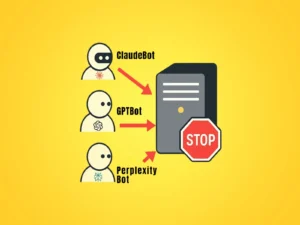
The following bots are important, each serving a specific role in accessing and processing content correctly:
- OAI-SearchBot – An OpenAI bot used for indexing and search.
- GPTBot – Another OpenAI bot, used for collecting public data to train language models.
- ChatGPT-User – Identifies traffic coming from real ChatGPT users.
- PerplexityBot – A bot developed by Perplexity.ai that retrieves information to answer user questions in real time.
- Perplexity-User – The user-agent used when a Perplexity user opens a link from an AI-generated answer.
- ClaudeBot – The user-agent used by Anthropic for automated crawling and site indexing for Claude.
- Claude-User – The user-agent triggered when a Claude user opens a link from an AI-generated answer.
- Claude-SearchBot – Used by Claude to search for and evaluate web pages as potential sources before citing them.
By allowing access to all these bots, you significantly increase your real chances of being discovered and cited.
P.S. Not all of the bots listed above directly influence whether your site appears in AI citations (for example, GPTBot is theoretically used only for training purposes). That said, I wouldn’t bet my house on the idea that if OpenAI doesn’t use your site for training, it couldn’t indirectly affect your perceived credibility or “score” when it comes to citations.
Add Relevant Schema Markup to Your Templates
Structured markup acts as a native language for LLMs and AI Overviews, enabling fast, accurate, and structured interpretation of on-page data.
LLMs rely heavily on understanding your site’s structure, what your website is about, how it’s organized, and how individual sections relate to one another. They aim to narrow down as precisely as possible to the most relevant pages and even specific sections within those pages, so they can return the exact piece of information your site provides to the user asking a question.
To support this, you need to make things easier for the LLM, which means simplifying the structure of each page using schema.org markup.
Depending on the type of page, you should implement the appropriate structured data:
Examples:
- Blog article – https://schema.org/Article
- Service page – https://schema.org/Service
- Product page – https://schema.org/Product
- Pages with a clear FAQ section – https://schema.org/FAQPage
etc.
P.S. You don’t need to fill out every single schema property, that’s a quick way to overcomplicate things and potentially break database connections. The best approach is to keep it simple.
For example, for the https://schema.org/Service schema, you can safely use just:
- name
- serviceType
- description
The schema will still be valid and correctly understood by LLMs, which is the ultimate goal.
Structure Your Headings for Maximum Clarity
Well-structured headings help AI understand hierarchy and context.
Just like in traditional SEO, heading structure is important, arguably even more so here. As mentioned earlier, LLMs rely heavily on structural clarity. A correct heading hierarchy for each page type should follow a clean structure like:
<h1>Main Heading</h1>
  <h2>Subheading</h2>
    <h3>Sub-subheading</h3>
  <h2>Subheading</h2>
    <h3>Sub-subheading</h3>
    <h3>Sub-subheading</h3>
Prioritize Speed That AI Actually Cares About
First, it’s important to note that classic speed metrics aren’t interpreted by LLMs in the same way they are by traditional search engines.
For example, metrics like LCP (Largest Contentful Paint) or other purely visual UX indicators don’t really matter for LLMs, because the user interaction happens on the AI platform, not on your website. Your site’s primary role is to be crawlable and easy for LLMs to understand.
So what does matter when auditing performance for LLMs?
TTFB (Time to First Byte) / Server Response Time
As the name suggests, this metric measures how long it takes for the server to start responding.
In short: you need a fast server.
FCP (First Contentful Paint)
This is the moment when the first visible piece of content appears (text, image, SVG).
FCP matters for LLMs because it signals that the site delivers readable content quickly; a sign that the information is accessible, stable, and worthy of being read and cited.
Make Sure Key Content is in the Raw HTML
This step checks whether key elements, such as the main title, featured image, and actual page content – are loaded directly in the HTML or injected later via JavaScript.
You need to ensure that:
- The H1 heading
- The main body content
- The first image
are all visible directly in the page source, without relying on JavaScript injection.
This is crucial for LLMs, as they process vast amounts of information and need fast, reliable access to content. Pure HTML is the fastest and safest way for them to extract information correctly.
JavaScript-injected content can still work, but as of writing this article, LLMs behave similarly to how search engines did about 14 years ago, strongly favoring clean HTML over JS-rendered content.
Don’t Rely on JavaScript for Core Content
Here, the page is analyzed with JavaScript enabled and disabled.
Any content that disappears when JavaScript is turned off is, in practice, invisible to LLMs.
Keep Your Brand Identity Consistent Everywhere
Just like in classic SEO, being visible and cited by LLMs requires you to be verified as a real-world entity.
That means consistent NAP information everywhere you appear online – from your Google Business Profile to your official website, partners, and press releases.
Inconsistencies or missing information lead to entity fragmentation, making it difficult for LLMs to confidently determine that all mentions refer to the same brand.