
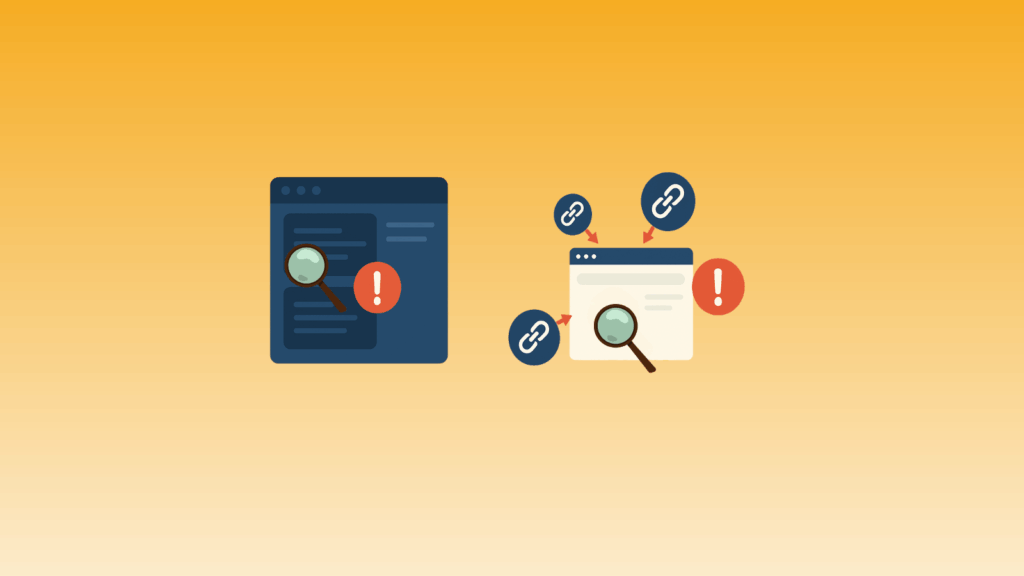

All the so-called “SEO experts” talk about cannibalization and how to prevent a client from having their articles, categories, services, or any other pages cannibalize each other. But I have literally never heard anyone talk about external site cannibalization, which is much harder to manage once it’s been created.
Table of Contents
What Exactly Is SEO Cannibalization?
In case someone has no idea what cannibalization means, let me take a short moment to explain it.
Cannibalization happens when your website ranks for a keyword with a different page than the one that’s actually supposed to rank, the one that’s properly targeted for that keyword.
This usually happens when you have at least two pages that are very similar for various reasons:
- They have similar meta titles
- They have similar visual titles (H1 headings)
- Or the content itself is very similar
When pages share at least two of these elements, they end up cannibalizing each other (meaning they compete against one another for the same keywords). In other words, inside those meta titles, headings, or content, the targeted keywords start overlapping. As a result, search engines don’t know which page to show for a given query.
In most cases, the website ends up downgrading all the pages involved, and effectively, none of them has the full ranking potential anymore. This phenomenon is one of the most common reasons why websites fail to rank properly.
Why No One Talks About External Cannibalization and Why It Matters
There’s another type of cannibalization that’s at least as common as internal content cannibalization. These are called external cannibalizations, meaning issues created when inexperienced SEOs or people who don’t understand how to build a proper link-building infrastructure or strategy end up using the same anchor text for different URLs.
And to be honest, the reason no one talks about it is that most people don’t even take it into consideration, and it simply never crosses their mind that this aspect could actually cause harm. First of all, cannibalization audits are done far too rarely, and secondly, most SEO specialists don’t even realize there could be issues in this area.
What Happens When You Use the Wrong Anchors in Link Building?
Example:
An SEO specialist wants to promote the URL https://site.com/green-laptops/, but on the same website, there’s also the main category: https://site.com/laptops/.
If that person uses the anchor text “laptops” instead of “green laptops” in their link-building strategy, there’s a good chance that https://site.com/green-laptops/ will start ranking for the keyword “laptops” instead of https://site.com/laptops/, or might even completely outrank it.
Of course, there are many nuances to consider here:
- The non-targeted URL (the wrong one) might have multiple incorrect anchors, not just one.
- The correct URL (https://site.com/laptops/) may have more targeted anchors than https://site.com/green-laptops/, but if the linking websites pointing to “green laptops” have much higher authority, then even a single misplaced anchor can cause cannibalization and permanently damage your rankings (and I’ll explain below why I said permanently).
How Common Is External Cannibalization?
Honestly, very often. I frequently run targeted audits for cannibalization issues, and in many cases, I find this exact problem, wrong anchors, which end up ruining entire sections of a website.
I usually notice this after completing the initial on-site cannibalization checks and seeing that there’s nothing wrong with the content itself. The next step is to analyze the external backlinks for the cannibalizing expressions, and that’s when I find what I don’t want to see: anchors placed incorrectly.
Can You Fix External Cannibalization Once It Happens?
This brings me back to what I said earlier, that a website can be damaged permanently, and here’s why I used those harsh words.
First of all, because once the issue exists externally, it’s no longer in your control. You might have placed an external link (or maybe someone else did it without your consent) using the wrong anchor text. In most cases (and I’ve seen dozens), it’s extremely difficult to convince the site owner or webmaster to change that anchor to the correct URL.
This happens mostly because the sites where links are placed usually do this constantly, it’s part of their business, and they don’t have the time or motivation to stop making money just to fix a link they added two years ago. Of course, I’m not saying it’s impossible; sometimes you do come across webmasters with common sense who’ll actually help you out.
How to Avoid External Cannibalization in the First Place
The main problem occurs because the people creating the link-building strategy don’t know the website well enough and are very superficial when planning it. They don’t perform internal research to see which anchors fit better for certain URLs, or, more precisely, which URLs fit better for specific anchors.
So, My Advice Is:
- Know the website well if you’re an SEO specialist.
- If you’re the site owner and you’ve outsourced your link-building strategy to an agency or freelancer, make sure you provide all the necessary details. If you want to promote a specific category, show them the subcategories as well. Don’t leave everything in the hands of so-called “specialists,” because most of them just want to get the job done quickly, collect their money, and go home.
- And, of course, last but not least, have some basic SEO common sense when creating a link-building strategy, because as I mentioned above, even a single misplaced anchor can destroy a business.