


This is the million-dollar question that clients have been asking since forever.
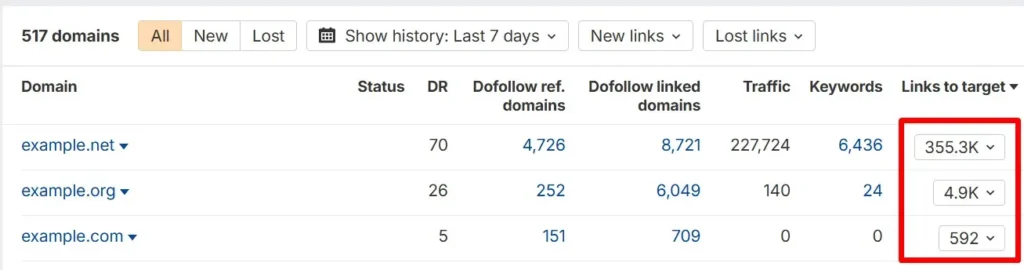
It usually comes up when they want to know the total number of links their site has gained through a link-building strategy, or when they start using backlink analysis tools like Ahrefs or Majestic SEO and realize, to their shock, that their competitors have tens or even hundreds of thousands of backlinks, while they have only a few thousand.
The answer here is short and straight to the point:
The number of backlinks does not matter at all. What truly matters is the number of referring domains, the unique websites linking back to you.
Of course, the quality of those domains matters too, as does the type of website and whether it is relevant to your niche, but that is a whole different discussion.
Table of Contents
Why the Number of Backlinks Doesn’t Really Matter
Think of it this way:
You get a backlink from Site A, placed inside a guest post. That gives you one link from Domain A, pointing to your website from within an article. Pretty straightforward so far.
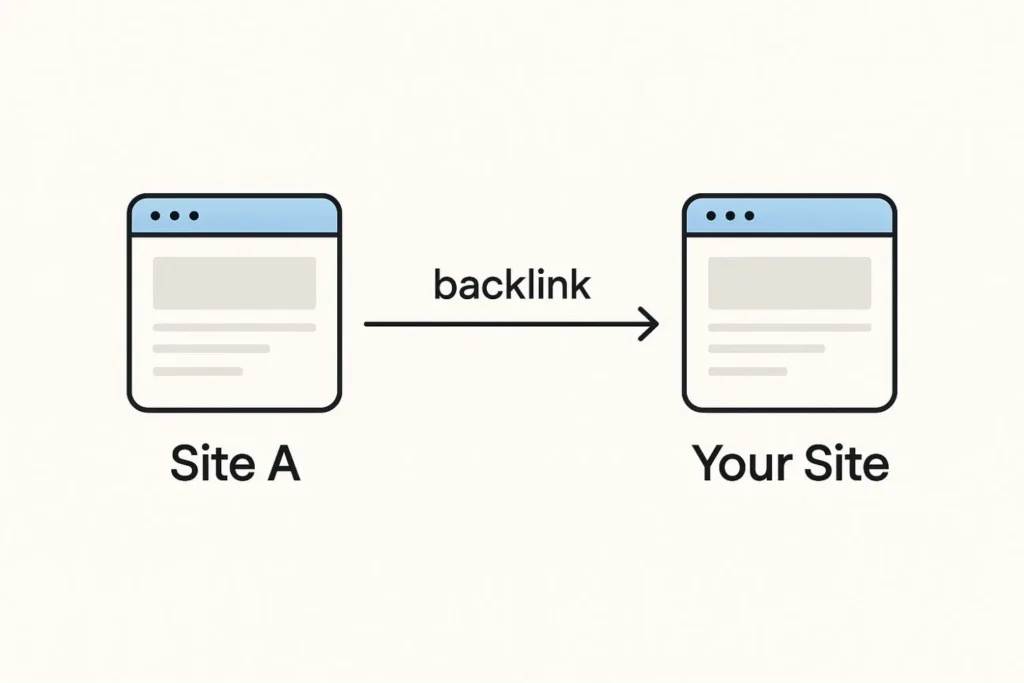
Now you get another backlink from Site B, also via a guest post. So far, the setup looks identical to Site A.
But Site B has a completely different way of handling its content and internal structure. For example, your article, the one containing your backlink in the first paragraph, might be listed in multiple categories. On top of that, Site B may use indexable tags, pagination, archives, and author pages, which could automatically create dozens of additional pages where your backlink shows up multiple times.
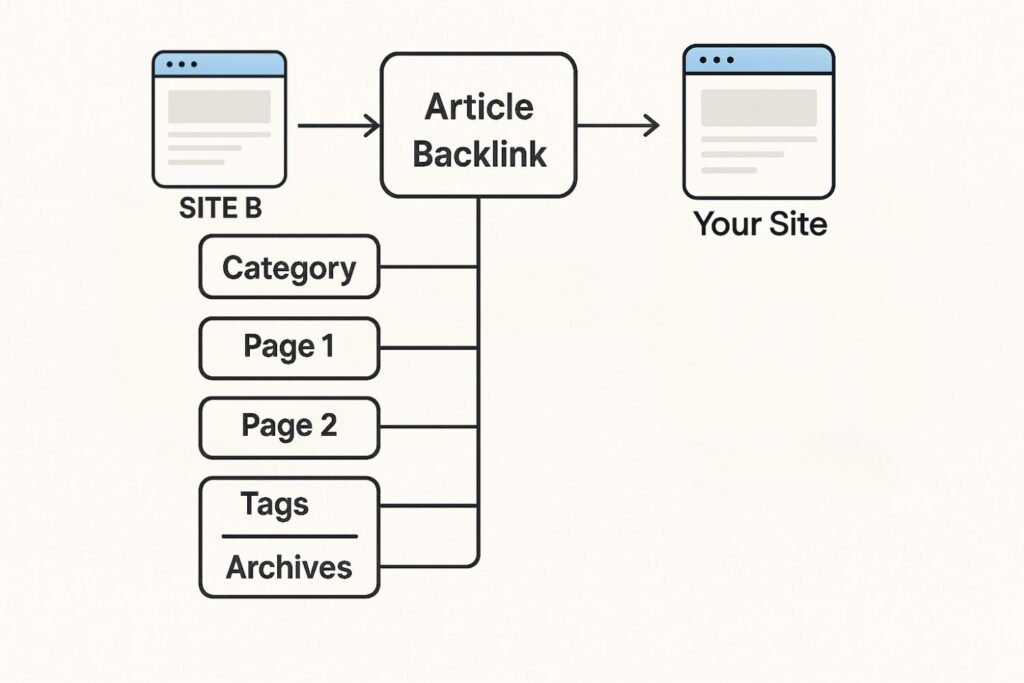
Now, do you really think those dozens of extra backlinks, generated this way (which is very common), count for more than a single backlink from a well-structured site that does not multiply its content across pages?
Absolutely not.
Different Anchors, Different Backlinks From The Same Domain
You might be wondering: What if I have multiple backlinks from the same site, but each one uses a different anchor and comes from a different article?
In that case, Google does not completely ignore the second link, but its link equity, meaning the value it passes, is significantly lower. From a single domain, the first link carries the most weight, the second contributes less (but not zero), and by the third or fourth, the value keeps dropping.
That said, take all this with a grain of salt, because there are plenty of nuances and exceptions in how this works.
You might walk away from this thinking you only need one backlink per domain. Not at all. That would mean building a strategy with hundreds of websites, each linking to you only once, and that would not look natural either.
So, keep things balanced and aim for a natural link profile.
Or, to put it simply: buy your links, but do it naturally. 🙂