

If you want to rank in search engines, link building is and has remained just as important as it has always been. The situation will remain the same in the coming years, apart from LLMs (Large Language Models) which have a different way of extracting information to provide answers. Search engines follow the same pattern, so I don’t see how anything would change in ranking approaches without referring to the backlinks received.
But a link building strategy really has to be, at its core, “a strategy” . Today I will cover the two main areas of a link building strategy, namely: how to choose the URLs and how to create the anchors that are part of the link building strategy.
Table of Contents
How to Select the Right URLs
Number of impressions
This is not the most important criterion, but it is the most consistent. It will be part of the other criteria presented when selecting URLs. Choose the URL based on the number of impressions received within a specific time period.
There is no point in adding a URL with very few impressions, unless it is a Hero URL (we will discuss this type of URL below).
URLs with non-brand keywords
For a correct analysis of the link building strategy, the brand name must always (absolutely always) be excluded, because the brand modifies the average position of the URL, and the average position of that URL is not the real one. We target organic traffic on non-branded keywords unaffected by the domain’s own name.
Average position
First, we look at the average position of the URLs we want to include in the link building strategy.
The average position must, of course, correspond to the selected time period. As a rule, we always select a short period. One week, or a maximum of three weeks, is ideal.
It is not correct to choose longer periods such as 3 months, 6 months, or 12 months to see the average position of URLs, because that average is NOT REAL. It is not real simply because it is spread over 12 months. You need the true and latest average position to know the current ranking of that URL.
The average position for selecting URLs in a link building strategy in order to achieve real results is:
- 4–7 to have a chance, after receiving links, to enter the top 3
- 10–12 to have a chance, after receiving links, to enter the top 10.
Value of URLs without backlinks
Consider that you have a URL with an average position of 7 achieved only through its content value, age, etc. Imagine what an additional link to this URL could mean.
Therefore, besides selecting URLs in a link building strategy based only on average position, also include URLs that have potential but no backlinks. Potential here means a decent position and a good number of impressions.
Hero URLs (Strategic Targets)
In addition to URLs that have a position we want to push forward (for example 4–7 or 10–12) or URLs without backlinks, of course a strategy also needs targeted URLs (if applicable).
These are the URLs that are in the client’s focus, for which there is a clear desire to rank.
Naturally, these URLs, as well as the others above that already have backlinks, should be chosen carefully and with a comparative analysis of the competition. For example, if we already have 20 backlinks with relevant anchors for a URL and we see that for the main keyword the competitors ranking above us have only 2 backlinks, it obviously makes no sense to spend resources acquiring more links in that area, because it is clear that backlinks are not the trigger for that type of keyword.
Tools and Methods for Gathering URL Data
You may have wondered by now: “Ok, you talk about average positions, number of impressions, etc., but how can I extract all these data?”
If we are dealing with a small presentation website, you can rely on the well-known Google Search Console to extract these data.
But, as the title of the article suggests, here we are talking about a link building strategy for e-commerce sites, so we will need more advanced tools that can extract URLs with details such as average position, number of impressions, etc., and at the same time allow very easy filtering.
We can use “Search Analytics for Sheets,” a Google Sheets add-on that is very easy to use for extracting data from Google Search Console (you need to be logged in to the site’s Google Search Console account for the tool to pull details from the site’s GSC).
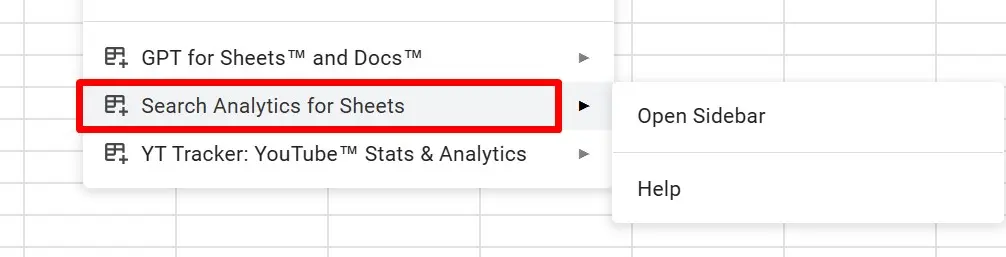
Or we can use Screaming Frog, leveraging the Search Console API, which helps us see in real time, while crawling the site or batches of URLs we provide; data such as number of impressions, average position, CTR, etc., essentially all the data from Google Search Console.
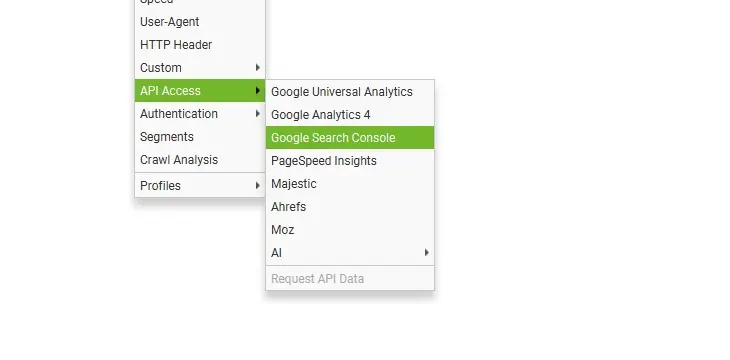
To see the number of backlinks for URLs, tools such as Ahrefs or Majestic SEO can be used. (For example, in Ahrefs you can input batches of URLs and it will tell you how many domains link to each respective URL.)
How to Choose the Right Anchors
We are now at the stage where the URLs have been selected and that part is done. The next step is to choose the anchors. Below is how these anchors should be selected and created.
Where to Find the Best Anchor Opportunities
The safest way to see which anchors a URL needs is again Google Search Console, the fundamental tool of any SEO campaign. We look here, with external tools or manually, at which queries each URL ranks for (of course, as mentioned above, non-brand queries).
Any URL will have from a few to dozens or even thousands of queries it ranks for. Sort by number of impressions and then look at the average position.
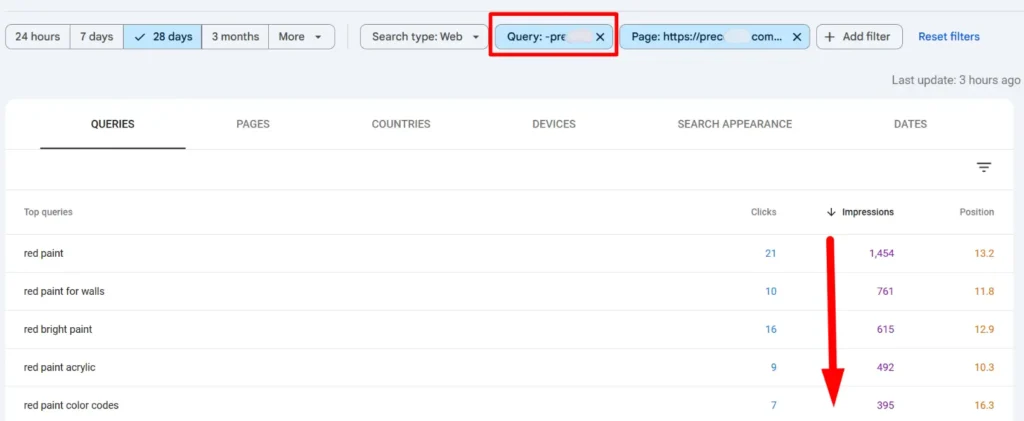
Naturally, human judgment is required to exclude queries that are not related to the URL, queries that are too general, or queries clearly assigned to another URL on the site but for which your URL also received impressions.
Be careful: if you use in the link building strategy anchors that should be used for another URL; or if that other URL has the keyword in its meta title and overlaps with that anchor, you can create unintended cannibalization (URLs competing for the same keywords). Cannibalization caused by a poorly executed link building strategy is much harder to fix than internal cannibalization from duplicate content.
Types of Anchors to Use
Anchors with prepositions
It is a must for anchors to include prepositions if they are longer and not “one-word”. Without prepositions you may end up with anchors such as “Muscle building steps” instead of “Steps for building muscle,” or “Online personal brand building steps” instead of “Steps for building a personal brand online.”
As you can see, anchors without prepositions sound forced, unnatural, and clearly crafted for link building purposes. This can trigger algorithmic penalties such as Google’s Penguin update.
Generic anchors
Anchors like “click here,” “read more,” or “this link” are necessary for a natural link building strategy. They should represent about 1 in 10 anchors in a link building strategy, but ideally used only if the URL already has a backlink targeting the main keyword with a focused anchor.
Image anchors
Again, to stay safe and avoid the patterns typical of most link building strategies, it’s good to place links on images as well. Ideally, for maximum effect, the image should have an alt tag containing the main keyword of the URL.
Naked URLs
Naked URLs are simply the URL itself. This type of link should be used for naturalness and to avoid giving search engines any hint that you are deliberately pursuing a link building strategy.
Very natural long anchors
For maximum effect nowadays you should use anchors that target the main keyword but also include a naturally phrased sentence around that keyword.
Example: if you want to target the anchor “cheap laptops” in a link building strategy, you could use the following anchor: “I went specifically to a store to see if they have offers and find cheaper laptops.”
Short anchors
Literally, the use of short anchors such as “cheap laptops,” concise and to the point, but they should not be overused.
Percentage of URLs Targeted in a Link Building Strategy for an E-commerce Site
Category pages
The most important set of URLs on which a link building strategy for an e-commerce site should focus is category pages. Categories contain the most searched and relevant expressions and, of course, where competition exists. Therefore, about 80% of the entire strategy should focus on categories.
P.S.: Links to filters (if you have indexable filters) can also work here. You can treat filters in a link building strategy the same way you treat a category.
Product pages
Product pages are relevant in an e-commerce link building strategy mainly for naturalness. This ensures the site does not receive links only to categories and allows ranking for Hero products you specifically want to promote. A share of about 10% on product URLs is a reasonable percentage.
Links to the homepage
Backlinks to the homepage add naturalness, strengthen the brand, and more recently also help in the LLM area.
Anchors for homepage links should be used like: “website.com,” “Website,” “https://website.com,” “WEBSITE,” or combinations of generic anchors plus brand such as “read more on Website.com”.
Recommended Brand Anchor Percentages
Currently it is very important to have a percentage of URLs containing the brand in the anchors within link building strategies. As noted above in “Choosing the Anchors,” keep in mind that for every type of anchor presented you should naturally include the brand; except for generic anchors and naked URLs.
Brand anchors count heavily for naturalness and brand growth, especially for e-commerce businesses competing in crowded markets. Usually, on forums, blogs, etc., a person who naturally writes an anchor and adds a backlink also includes the brand.
Therefore:
- 20–30% of the anchors in a link building strategy should contain the brand for naturalness and E.E.A.T.
- 50% of all anchors should contain the brand if the goal is ranking in LLMs (Large Language Models), which place great emphasis on brand notoriety and trust.
To see what percentage of anchors on your site contain the brand name, I recommend using Ahrefs in the Backlinks Profile > Anchors section.
There you can filter the anchors containing your site’s name and calculate what percentage of all anchors currently include the brand.
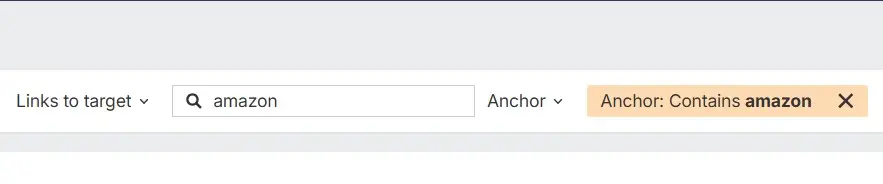
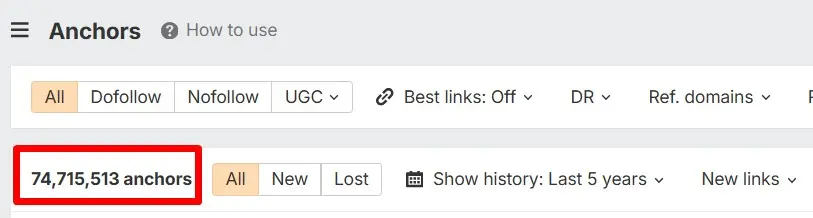
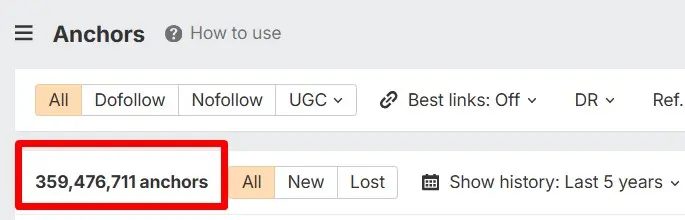
For example, the Amazon site has a total number of anchors of 359,476,711
And a number of anchors containing “Amazon”: 74,715,513 → this results in a percentage of 20.78% of anchors containing the brand.
That is fine. But keep in mind that your site is not a huge brand like Amazon and therefore requires a higher percentage in link building strategies, exactly as mentioned above.
Note: you may see many fake anchors, patterns of anchors created by spam scrapers, so if you notice such patterns, filter them out to reach the most realistic percentage possible.
P.S.:
It should go without saying, BUT any URL included in a link building strategy must be indexable.
What does indexable mean?
- It must not be noindex
- It must not be canonicalized to something else (it should have a self-canonical)
- It must not redirect to something else
- It must not be a soft 404
- It must not be blocked by robots.txt